SENSORI DALI2
Sensors for structured lighting control systems
The DALI‑2 Sensors category at Digimax includes a range of professional ZETAQLAB devices designed for advanced, centralized lighting control in complex environments.
Based on the DALI‑2 standard protocol, these sensors operate within wired bus systems, ensuring high reliability, precise control, and interoperability across all components of the lighting infrastructure.
ZETAQLAB DALI‑2 solutions are engineered for applications where stability, scalability, and structured system architecture are essential, particularly in industrial, commercial, and large-scale building environments.
Filtra per
-
- Select a value
-
- Select a value
-
Results
Sort by
Elements per page
No exact match, try with fewer filters or a more generic term
ZETAQLAB DALI‑2 sensors: functions and system role
Within a DALI‑2 system, sensors play a key role as input devices, collecting real-time data from the environment and enabling intelligent control of lighting behavior.
These sensors typically detect parameters such as occupancy and ambient light levels, transmitting this information directly over the DALI bus. The control system then processes this data to automatically adjust lighting according to predefined logic or dynamic conditions.
This approach allows lighting systems to respond continuously to environmental changes, improving both operational efficiency and user comfort while maintaining full system control.
Key features of DALI‑2 sensor systems
DALI‑2 sensors are designed to operate within a standardized and distributed architecture, where multiple devices can coexist and communicate efficiently on the same bus.
The multi‑master structure of DALI‑2 allows several control devices—such as sensors and interfaces—to share system control, ensuring flexibility and redundancy. Sensors can operate in event-driven mode, sending signals when a condition changes (e.g. motion detected or light level variation), enabling responsive and efficient automation.
This results in a control system that is both robust and adaptable, capable of managing complex lighting scenarios with high precision.
Integration within DALI‑2 systems
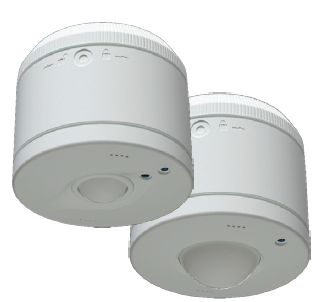
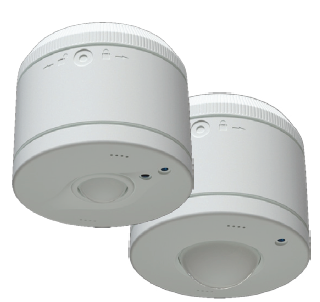
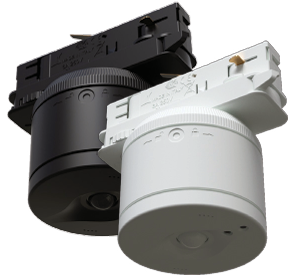
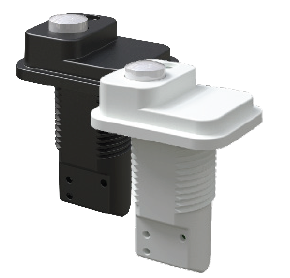
ZETAQLAB DALI‑2 sensors can be either integrated directly inside luminaires or installed as standalone devices connected to the DALI bus.
When integrated into luminaires, they enable compact and efficient system design, combining sensing and lighting functions within a single installation point. As standalone devices, they provide flexibility in positioning and system expansion.
All connected components—sensors, drivers, servers, and control modules—communicate over the same bus, creating a unified infrastructure that can be configured and managed centrally through dedicated software tools.
Advantages of DALI‑2 sensor-based systems
The adoption of DALI‑2 sensors offers several strategic advantages in lighting system design.
From an operational perspective, the wired architecture ensures stable communication and consistent performance, making it suitable for mission-critical environments. From a design standpoint, the standardized protocol enables interoperability between devices from different manufacturers, reducing system complexity and enhancing long-term maintainability.
Furthermore, DALI‑2 systems allow precise addressing and control of each individual device, enabling advanced automation strategies and detailed monitoring of system behavior.
Application areas
DALI‑2 sensors are widely used in environments where structured, centralized lighting control is required.
Typical applications include industrial facilities, logistics warehouses, office buildings, public infrastructure, and large commercial spaces. In these contexts, the ability to precisely manage lighting levels, automate responses to occupancy and daylight, and maintain system stability over time is a critical requirement.
Their reliability and scalability make them particularly suitable for large installations and projects where long-term performance is a priority.
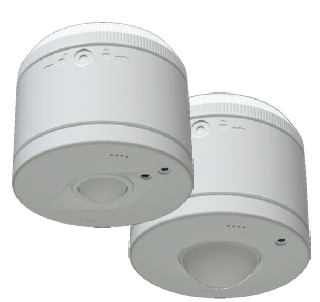
Frequently Asked Questions - DALI 2 Sensors
What is a DALI‑2 sensor?
A DALI‑2 sensor is a control device that detects environmental parameters—such as occupancy and light levels—and sends this information through the DALI bus to automate lighting behavior.
How does a DALI‑2 sensor communicate with the system?
The sensor communicates via the DALI bus, transmitting signals to controllers or servers that process the data and adjust lighting accordingly.
Can DALI‑2 sensors be integrated into luminaires?
Yes, DALI‑2 sensors can be integrated directly into luminaires or installed independently, depending on system design and application requirements.
What are the main benefits of using DALI‑2 sensors?
DALI‑2 sensors provide reliable wired communication, precise lighting control, and full compatibility with standardized systems, making them ideal for complex and large-scale installations.